

-
![Naphtha Reforming Catalysts]() Naphtha Reforming Catalysts
Naphtha Reforming Catalysts1.Naphtha reforming catalysts can be divided into semi-regenerative reforming and continuous regenerative reforming kind.
2.It has high efficiency, selectivity, specificity and a certain... -
![Claus Tail Gas Hydrogenation Catalysts For Coal Chemical Industry]() Claus Tail Gas Hydrogenation Catalysts For Coal Chemical Industry
Claus Tail Gas Hydrogenation Catalysts For Coal Chemical Industry1.Claus tail gas hydrogenation catalysts for coal chemical industry are suitable for low -temperature Claus tail gas hydrogenation in the field of petroleum refining, petrochemical and coal...
-
![New Type Guard Catalyst]() New Type Guard Catalyst
New Type Guard Catalyst1. New type guard catalyst are new type hydrogenation protection catalyst.
2. They are developed by FRIPP, based on rich experiences of operated projects.
3. They are suitable for... -
![Non-hydrogen Dewaxing Catalyst]() Non-hydrogen Dewaxing Catalyst
Non-hydrogen Dewaxing Catalyst1. On the basis of the original catalyst, the non-hydrogen dewaxing catalyst is more suitable for naphthenic straight-run gasoline;
2. Using ZSM zeolite as the carrier;
3. It has... -
![Diesel Non-hydrogen Depreciation Catalyst]() Diesel Non-hydrogen Depreciation Catalyst
Diesel Non-hydrogen Depreciation Catalyst1. Diesel non-hydrogen depreciation catalysts can be used in the production of gasoline and diesel oil from gas oil at atmospheric pressure in the vapor phase process;
2. It can also be... -
![Semi Regenerative Reforming Catalysts]() Semi Regenerative Reforming Catalysts
Semi Regenerative Reforming Catalysts1.Platinum and rhenium are the basic active metal components of semi-regenerative reforming catalysts.
2.Semi regenerative reforming catalysts are an effective way to improve the catalyst... -
![Steam Reforming Catalyst]() Steam Reforming Catalyst
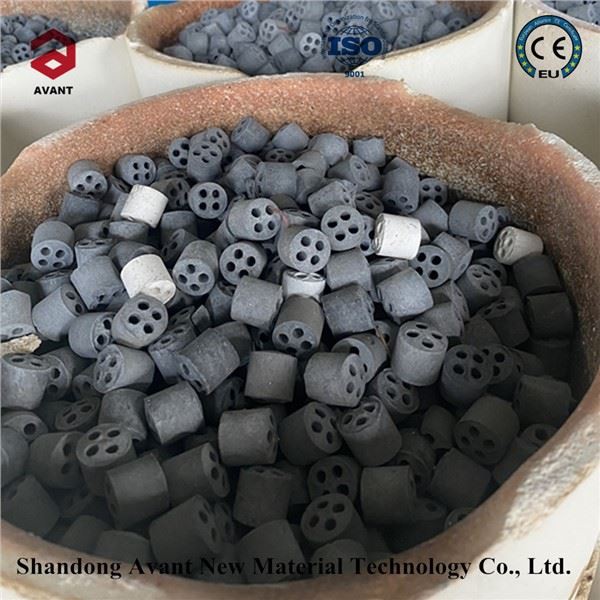
Steam Reforming Catalyst1.Steam reforming catalyst is highly dispersed active component nickel
2.It is light black gray green with four-hole convex cylindrical
3.Gas material:various refinery dry gas,... -
![RFS09 Sulfur Transfer Agent For Catalytic Cracking Flue Gas]() RFS09 Sulfur Transfer Agent For Catalytic Cracking Flue Gas
RFS09 Sulfur Transfer Agent For Catalytic Cracking Flue GasRFS09 sulfur transfer agent is a catalytic cracking agent developed based on a variety of technology platforms to efficiently reduce the sulfur content in recycled flue gas.
-
![CGP-1 Series Catalyst For MIP-CGP Process]() CGP-1 Series Catalyst For MIP-CGP Process
CGP-1 Series Catalyst For MIP-CGP ProcessMIP-CGP process is developed by Petrochemical research institute that to produce the largest amount of isoalkane, productive propylene and reduce the olefins content of catalytic gasoline.
-
![GCR Continuous Refroming Catalyst]() GCR Continuous Refroming Catalyst
GCR Continuous Refroming CatalystGCR is continuous reforming catalyst with high active, high hydrothermal stability. The characteristic is activity increased significantly and 6-8℃ higher than previous generation catalyst.
-
![Reforming/Continuous Reforming (Dual/Multifunctional Metal) Catalysts (CCR)]() Reforming/Continuous Reforming (Dual/Multifunctional Metal) Catalysts (CCR)
Reforming/Continuous Reforming (Dual/Multifunctional Metal) Catalysts (CCR)The process of rearranging the molecular structure of hydrocarbons in gasoline fractions into new molecular structures is called catalytic reforming.
-
![AM-CHP/RP-1 Catalytic Cracking Catalyst(DCC Process)]() AM-CHP/RP-1 Catalytic Cracking Catalyst(DCC Process)
AM-CHP/RP-1 Catalytic Cracking Catalyst(DCC Process)Catalytic cracking is the process of pyrolyzing petroleum hydrocarbons at high temperature in the presence of catalysts to produce low-carbon olefins such as ethylene, propylene, butene, and light...




 Karen Oday
 Tara Smith
Steven Doerr
Catrina Tamez
Elvira Roeder
Thomas Becker
Tara Smith
Steven Doerr
Catrina Tamez
Elvira Roeder
Thomas Becker
WebMay 16, 1988 · RESULTS When reforming a wide cut naphtha (343—413 K cut), the most difficult fraction to aromatize is the C6 fraction. The aromatizing efficiency of a reform- ing...
WebThe catalysts used in reforming contains platinum (Pt), palladium (Pd), or, in some processes, bimetallic formulations of Pt with Iridium or Rhenium supported on alumina (Al 2 O 3 ). Catalytic...
WebSep 30, 2020 · The first catalytic naphtha reforming came into practice at the start of World War II. It used a bed of catalyst to improve the yields by not just cracking non-aromatics out of the...
WebThe most widespread process for rearranging hydrocarbon molecules is naphtha reforming. The initial process, thermal reforming, was developed in the late 1920s....
WebThe feedstock for catalytic reforming is straight-run (directly from the crude oil) heavy naphtha that is separated in the naphtha fractionator of the Light Ends Unit, as discussed in Lesson 4....
WebNov 16, 2022 · Naphtha reforming catalysts can be divided into semi-regenerative reforming and continuous regenerative reforming kind. Among them, continuous...
