


Catalytic Cracking Catalyst for Petrochemical
1.Catalytic cracking catalyst for petrochemical is a kind of FCC kind 2.Materials:three rotation fine and flue gas desulfurization powder 3.Process: complex demetallization and in-situ crystallization treatment 4.The main active component: Y-type molecular sieve
Product Introduction
Products Description
Catalytic cracking catalyst for petrochemical uses Y-type molecular sieve as the main active component.
It is made of three-rotation fine powder and flue gas desulfurization fine powder of oil refining enterprises and a high surface mineral after special treatment such as complex demetallization and in-situ crystallization.
As a carrier, a general-purpose FCC catalyst is prepared:
1. The catalyst has well-developed pores
2. Moderate activity and specific surface area
3. Good activity stability and strong cracking ability
Application:
The performance of this series of kind is basically the same as that of special kind, which fundamentally solves the problem of solid waste treatment in petrochemical enterprises.
Technology Index:
Item | Index | Item | Index |
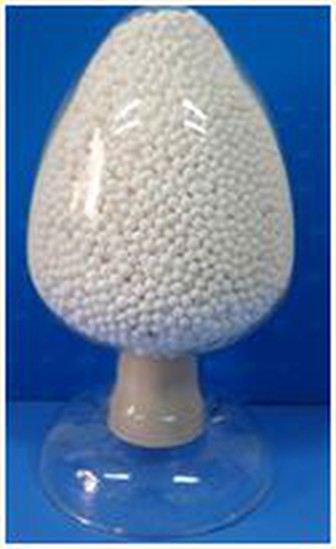
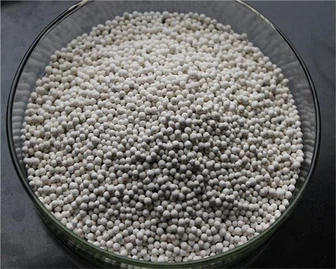
Appearance | Off White Microspheres | Pore Volume (ml/g) | ≥ 0.35 |
AL₂O₃(%) | ≥ 40.0 | Grain Size | |
Ni (%) | ≤ 0.05 | 0-20μm(%) | ≥3.0 |
V (%) | ≤ 0.02 | 0-40μm(%) | ≤18.0 |
Ca (%) | ≤ 0.2 | 0-149μm(%) | ≥89.0 |
Na (%) | ≤ 0.3 | D(V,0.5),μm | 65.0-85.0 |
Crushing Strength (%) | ≤ 2.5 | Micro-Activity(%) [800℃/4h,100%H₂O] | 75.0 |
Bulk Density (g/ml) | 0.65-0.85 | LOI(%) | 13.0 |
Surface Area (m²/g) | ≥ 230 |

E-Cat Analysis
Technical Guidance On Site
Remote Technical Exchange
Unit-Operation Optimizing
Adjusting Formulations According To Your Situation
FCC Process is very important in catalytic cracking catalyst for petrochemical
The normal residue and wax oil enter the riser, settler and regenerator through the raw material oil buffer tank to form oil and gas, and enter the fractionation tower.
1.A part of the oil and gas enters the crude gasoline tower, absorption tower, and air compressor into the condensed oil tank, passing through the reabsorption tower, stabilization tower, and finally gasoline refining to produce gasoline.
2.A part of the oil and gas enters the diesel stripping tower are going through the fractionation tower, refining the diesel oil to produce diesel oil. Other part of the oil and gas enters the oil slurry circulation are going through the fractionation tower, and finally produces the oil slurry.
3.A Part of the oil and gas enters the liquid hydrocarbon buffer tank are going through the fractionation tower, passing through the desulfurization adsorption tank, the sand filter tower, the water washing tank, the desulfurized alcohol extraction tower, the pre-alkali washing tank, the amine liquid recoverer, the desulfurization extraction tower, and the buffer tower.Finally they enter into the liquid state hydrocarbon tank to form liquefied gas.
4.A part of the oil and gas are passing through the liquid hydrocarbon buffer tank and enters the depropanizer, reflux tower, deethanizer, refined propylene tower and reflux tank. Finally they enter into the spherical tank in the propylene area to form liquid propylene. The liquid propylene is further processed in the polypropylene workshop to produce polypropylene.
1
Research
5 doctoral supervisors
who are engaged in the
research and development
of catalyst materials and
refining process technology
2
Techinical Service
17 refinery expertises and engineers with working bankgrounds in Sinopec or PetroChina.
3
Manufacture
we have rich-experienced and expertised engineers and workers in FCC production plants, and many of them had worked in Sinopec FCC factory.


 +86-533-2802131
Hot Tags: Catalytic Cracking Catalyst for Petrochemical, China, manufacturers, suppliers, factory, wholesale, price, CO High Temperature Shift Catalyst, Claus Sulfur Recovery Catalyst, Hydrocarbon Steam Reforming Catalyst, Steam Reforming Catalyst For Producing Hydrogen, GCR Continuous Refroming Catalyst, CO Low Temperature Shift Catalyst
You Might Also Like




Send Inquiry
