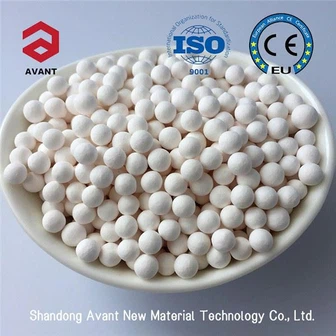
Application of 4A molecular sieve in daily chemical industry
Because of the pore structure of 4A molecular sieve crystal and the large specific surface area of particles, 4A molecular sieve has very strong adsorption performance. For non-ionic surfactant adsorption, 4A zeolite is 3 times more than NTA (secondary amino triacetate) and sodium carbonate, and 5 times more than sodium tripolyphosphate (STPP) and sodium sulfate. This property is used for polymer forming. It makes sense to produce more concentrated surfactants in high concentration detergents to prepare products with good washing and flow properties.
4A zeolite has good oil adhesion. When 4A zeolite was added to sodium carbonate, CMC, sodium silicate and sodium sulfate, the oil adsorption capacity on nylon cloth was significantly reduced. 4A zeolite with particle size of 0.4-1.0 m has better dispersion and prevents adhesion to the fabric. Although the dispersibility of 4A molecular sieve is not as good as that of STPP, it can solve the problem of dirt dispersion compounded with sodium polyacrylate, which has a certain effect on improving the degreasing ability of specific fabrics. Four, four and other auxiliary equipment have good compatibility. 4A molecular sieve and other additives can make its properties complementary. Compared with STPP, 4A molecular sieve has better dispersion of dirt and hardness ions, but 4A molecular sieve is mixed with STPP. Decontamination can achieve the effect of STPP alone. This is because STPP can rapidly combine calcium and magnesium ions from the solid surface and transfer them to 4A molecular sieves through water-based media. 4A zeolite has poor ability to bind magnesium ions and can be compensated by complexing silicate and carbonate in zeolite.
The ion exchange of 4A molecular sieves is carried out on the skeleton with aluminum ions. Each aluminum ion has a negative charge and can bind not only sodium but also other cations. Calcium and magnesium ions can enter the large crystal pores occupied by the original sodium ions and replace the sodium ions in the 4A molecular sieve - that is, the sodium ions in the 4A molecular sieve can conduct ion exchange and combine with the Ca2 +, Mg2 + ions in hard water. Exchange to achieve the purpose of softening water quality.