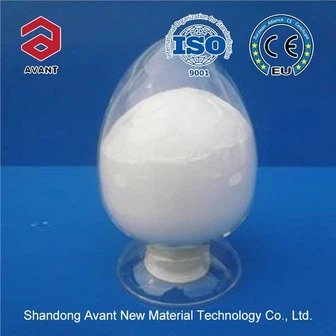
What kinds of molecular sieves are common
Molecular sieve is a kind of silicoaluminate, which is mainly composed of silica - alumina via oxygen bridge, forming an open skeleton structure. In this structure, there are many holes with uniform pore size and well-arranged pores, which have large internal surface area. In addition, it contains metal ions with a lower electricity price and a larger ionic radius, and water in the combined state. Because water molecules are continuously lost after heating, but the crystal skeleton structure remains unchanged, many cavities of the same size are formed, and the cavities are connected through multiple microholes with the same diameter, and the molecules of the material have the same diameter. Holes smaller in diameter are adsorbed in the cavity. Molecules larger than the pores are rejected, so molecules of different sizes are separated until the role of the sieve molecule is known as the molecular sieve. It is mainly used for deep drying of various gases, liquids, separation and purification of gases, liquids, catalyst carriers and so on, so it is widely used in refining, petrochemical, chemical industry, metallurgy, electronics, national defense industry and so on, and in medical treatment, light work, agriculture, environmental protection and many other aspects are also increasingly widely used.
3A molecular sieve, mainly used for oil cracking gas, olefin, oil refinery, oil field gas drying, chemical, pharmaceutical, industrial desiccant such as insulating glass.Chemical formula: 2/3K2O · 1/3NA22o ·Al2O3·2SiO2·.9/2H2O
Main USES: 1. Drying liquid such as ethanol
2. Air-dried insulating glass
3, nitrogen - hydrogen mixture of gas drying
4. Refrigerant drying
4A zeolite is mainly used in natural gas and various chemical gases and liquids. , refrigerants, pharmaceuticals, drying of electronic materials and volatile substances, purification of argon, separation of methane, ethane and propane.
Main USES: 1. Natural gas drying, desulfurization, decarbonization; 2.2. Nitrogen and oxygen separation, nitrogen and hydrogen separation, oxygen preparation, nitrogen and hydrogen;
3. Dewaxing petroleum and separating normal hydrocarbon and cyclic hydrocarbon from branched hydrocarbon.
(Renewable)
13 xapg molecular sieve
It is mainly used for purifying raw material gas of large and medium-sized air separation equipment.
The special molecular sieve series for insulating glass can absorb water and residual organic matter in insulating glass at the same time, so that the insulating glass can keep smooth and transparent even at very low temperature, and fully reduce the strong pressure difference between inside and outside. Insulating glass due to seasonal and diurnal temperature differences. The problems of deformation and damage caused by expansion or contraction of ordinary insulating glass caused by desiccant are solved thoroughly, and the service life of insulating glass is extended adequately.The molecular sieve activation powder series is obtained by dehydrating the original part of the molecular sieve. It has a certain degree of dispersion and a fast adsorption rate. Mainly used in coatings, coatings, resins and related adhesives additive.
Molecular sieve regenerationFor good performance and maximum life, the sieve must be regenerated over a period of time. The correct regenerative zeolite is as low as the fresh zeolite, its adsorption and mechanical properties decay and aging. There are two basic methods for regeneration of molecular sieves:
1) Change of temperature, namely "temperature change". It removes the adsorbed material by heating the molecular sieve. In industry, the zeolite is usually heated by preheated regenerative gas and blown to about 200℃ and desorbed adsorbents removed.
2) Change of relative pressure, namely "variable pressure". Usually used in gas phase adsorption processes. The basic method is to keep the temperature of the adsorbent constant and remove the adsorbent by reducing the pressure of the inert gas and by blowing back.
Regeneration usually takes place in the opposite direction to adsorption, so most of the adsorbents contained in the inlet of the adsorption bed do not have to pass through the entire bed, and some molecular sieves may not come into contact with the adsorption bed. Hot and humid gas, thus increasing the service life of molecular sieve. The regenerated gas should be as dry as possible, otherwise it will affect the adsorption efficiency.