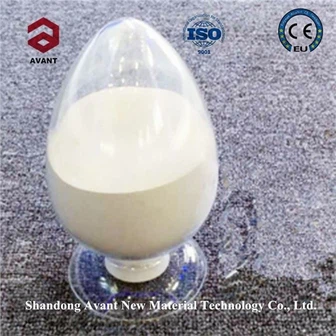
Five Methods Of Removing Impurities From High-purity Aluminum Hydroxide
As a good material, high-purity aluminum hydroxide is widely used in various occasions. In order to ensure the quality of the product, it is necessary to remove its impurities during production.
There are five mainly removal methods:

1. Impurities are removed by a reaction that produces a precipitate.
For example, zinc sulfate impurities are contained in the process of trial production. At this time, we can convert the impurities into precipitates and remove them by adding an appropriate amount of barium chloride solution.
However, it should be noted that removing sulfate ions is different from testing SO42- ions. Only barium chloride can be used here, and barium nitrate cannot be added, otherwise new impurities will be introduced.
2. Removal of impurities by the reaction of the generated gas.
For example, when removing sodium carbonate or other volatile, weak acid sodium salt impurities contained in high-purity aluminum hydroxide, just add an appropriate amount of sulfuric acid to remove the impurities into gas.
3. Use the amphiphilic properties of substances to remove impurities.
4. Impurities are removed by the law of mutual conversion between acid salts and normal salts.
5. Use redox properties to remove impurities.
The removal of impurities in products is generally the use of impurities to react with reagents to generate water-soluble substances, which are then removed in layers with the original organic matter.