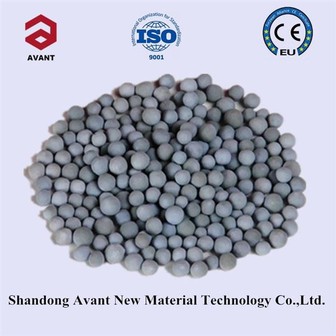
Industrial Application Of Selective Hydrogenation Catalyst For Catalytic Gasoline
Technical Principle
The raw material is catalytic cracking gasoline, which contains diolefin, sulfur, nitrogen and aromatics, etc. Under the condition of low temperature and pressure, under the action of selective hydrogenation catalyst (HR-845), the selective hydrogenation of diolefin to monolefin mainly occurs. Diolefin is unstable and easy to polymerize into colloid, so the conversion of diolefin to monolefin can improve the stability of the product. All thiols and some light sulfides were converted into heavy sulfides and olefins were isomerized. The selected hydrogenated products were treated with hydrodesulfurization catalyst (HR-806) to undergo hydrodesulfurization and nitrogen removal.
Technical and design features
The prevulcanization catalysts HR-845S and HR-860S developed by Axens were selected. The main components were high purity alumina carrier, and the reactive components were nickel oxide and molybdenum oxide. The catalyst was loaded in nitrogen environment and oxygen-free loading was completed in two days.Omit catalyst vulcanization, protect equipment, save start-up time.
In order to prolong the operation cycle of the catalyst, the selective hydrogenation reactor was used to remove the diolefin and mercaptans. The hydrodesulfurization catalyst was protected from the rise of reactor pressure drop caused by the participation of diolefin in the HCN fraction. The raw oil is provided with filter and hydrogen protection facilities.The reaction product heating furnace is arranged at the outlet of the reaction product to avoid the furnace tube easy coking caused by the heating furnace in front of the reactor.The Axens process package stipulates that in order to ensure product quality, the temperature should be raised before the quantity is raised, and the quantity should be lowered before the temperature is lowered.By slowly raising the temperature first and then the dosage (up to 1℃ each time), there is no risk of flying temperature.