The relationship between activated alumina carrier and calcination temperature
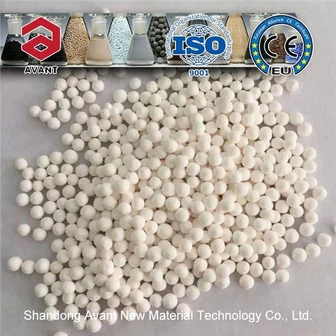
The use of hydrothermal treatment and the addition of pore expanders can effectively control the pore structure of the activated alumina carrier, but after forming, the calcination process is also one of the important factors affecting the pore structure. Roasting includes processes such as dehydration, dehydroxylation, particle sintering, decomposition or removal of volatile substances, and burning of organic matter. These processes all affect the pore structure of the activated alumina carrier.
With the increase of the calcination temperature, the average pore diameter gradually increases. For every 100°C increase in temperature, the proportion of pores larger than 20nm increases by about 5%; the corresponding specific surface area gradually decreases. The increase in the overall pore diameter of activated alumina is mainly caused by the collapse of smaller pores at high temperature to form larger pores. As the calcination temperature increases, the content of activated alumina increases, and the specific surface area and pore volume decrease. When the temperature is higher than 450°C, the content remains basically unchanged, while the specific surface area and pore volume still show a downward trend.
Activated alumina with high specific surface area and large pore volume can be obtained when the calcination temperature is 450°C. In addition, proper adjustment of the heating rate can completely remove the water in the pores of activated alumina, thereby eliminating agglomeration and fracture.