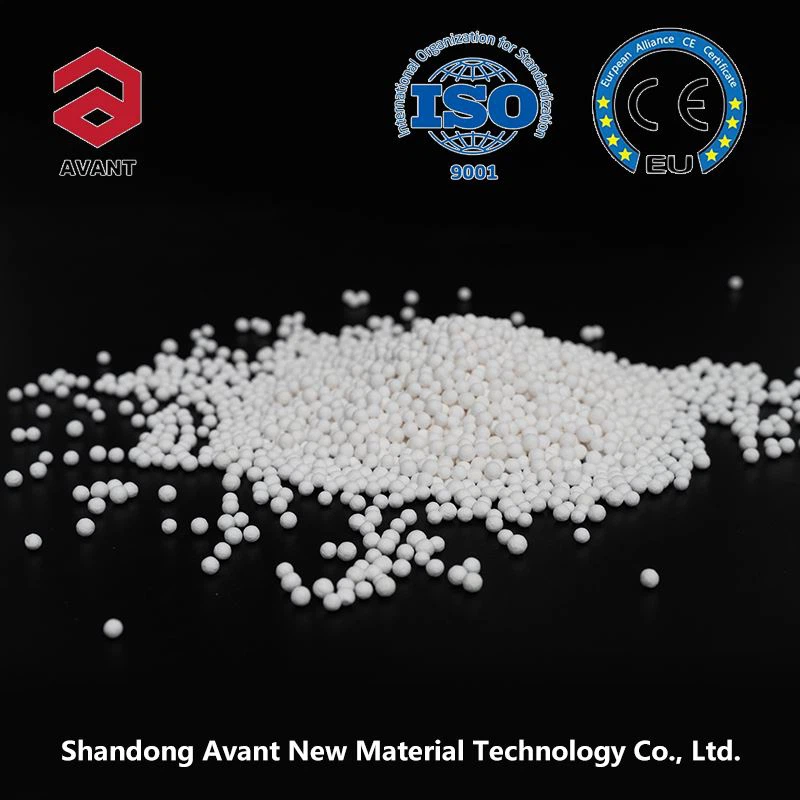
Activated alumina desiccant(Industry) introduction
Separation and purification of circulating process flow.
Activated alumina desiccant has excellent adsorption properties for highly polar compounds, such as water and ethanol. At the same time, it can also adsorb TBC (p-tert-butylcatechol) in hydrocarbons and heavy metal substances.
Hydrocarbon adsorption.
Under proper conditions, the surface pore size distribution and surface chemistry of the activated alumina desiccant can help adsorb impurities in hydrocarbons.
Removal of acid impurities.
Remove the acidic substances generated in the use of transformer oil, lubricating oil and refrigerant. Activated alumina desiccant can remove acidic substances generated during its use. In the manufacturing process of chlorinated and fluorinated hydrocarbons, the removal of excess halides and water is necessary for non-corrosive products.
Drying.
Almost all gases and liquids can be dried with activated alumina desiccant. During the production, storage, and transportation of liquids, the moisture in the liquid needs to be removed.
3/16” size is generally recommended for gas phase dehydration reaction because of its small pressure drop and high water absorption.
1/8” and 7*14 Taylor mesh sizes are generally recommended for liquid-phase dehydration reactions and other adsorption with limited mass transfer.
Activated alumina desiccant has become the standard industrial desiccant for compressed gas. It can maintain good working performance under low dew point and is suitable for dryers of various sizes. Activated alumina desiccant can also be used as a desiccant for gas phase dehydration in regeneration environment (350 ~ 600°F) and pressure swing (PSA) environment.
5. Adsorption of TBC polymerization inhibitor
Activated alumina desiccant can effectively adsorb rubber, PS (thermoplastic polystyrene synthetic resin), ABS (styrene-butadiene-styrene block copolymer), TPE (polyolefin thermoplastic elastomer), etc. The TBC (p-tert-butylcatechol) polymerization inhibitor used to meet product requirements. At present, many manufacturers of rubber, PS, ABS, and TPE use activated alumina desiccant to adsorb TBC polymerization inhibitor.