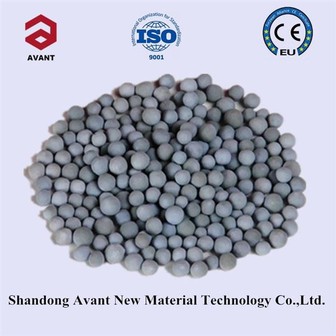
Performance and application of Raney nickel catalyst
Applications:
Activated catalyst products are mainly used in catalytic hydrogenation reactions of basic organic chemicals, which can be used for hydrogenation of organic carbon-hydrogen bonds, hydrogenation of carbon-nitrogen bonds, nitroso compounds and nitro compounds. Unsaturated compounds such as olefins, alkynes, nitriles, diolefins, aromatic hydrocarbons, carbonyl-containing substances, azo and oxoazo compounds, imines, amines and dibenzylenes.
In addition to hydrogenation as a catalyst, there are also deamination, dehalogenation, desulfurization and other multifunctional catalysts in the chemical field in pharmaceuticals, dyestuffs, pesticides, oils and fats, spices, synthetic fibers, petrochemicals and other fields have a wide range of applications.
Properties:
The high catalytic activity (activity due to the porous nature of the structure), combined with the fact that hydrogen is readily adsorbed during the actual catalytic activation, makes Raney nickel a useful catalyst in many hydrogenation reactions, where the material on the surface diffuses away when the hydrogenation reaction is complete and the catalyst can continue to be used. The structure and thermal stability of the catalyst (in fact, it does not decompose at high temperatures) allows it to be used under a wide variety of reaction conditions. In addition, the solubility of Raney nickel is negligible in the most common laboratory solvents, except for mineral acids such as hydrochloric acid, and its relatively high density facilitates its reaction completion for liquid phase separation.