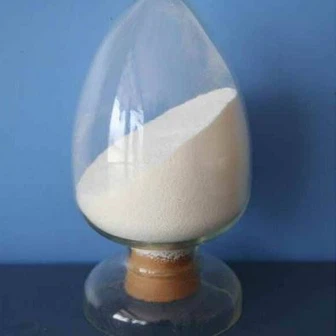
Introduction to halogen-free flame retardants--ATH&MDH
Aluminum hydroxide AL(OH)3 accounts for more than 40% of the total amount of flame retardants used. Aluminum hydroxide itself has three functions: flame retardant, smoke elimination and filling, and it is known as a harmless inorganic flame retardant because it is non-volatile, non-toxic, and can produce synergistic flame retardant effects with a variety of substances. But aluminum hydroxide has the disadvantage of adding large amount, usually need to add more than 50% to have a good flame retardant effect. To overcome this drawback, granulation technology can be used to develop towards ultra-fine, which is a narrower particle size distribution; improved wrapping technology to improve its dispersion in the polymer; treated with macromolecular bonding, etc.
Magnesium hydroxide Mg(OH)2 is a fast-developing additive flame retardant, low smoke, non-toxic, can neutralize the acidic and corrosive gases in the combustion process, so it is an environmentally friendly green flame retardant. Its flame retardant mechanism is similar to that of AL(OH)3. Compared with AL(OH)3, the decomposition temperature of Mg(OH)2 is 100-150C higher than that of AL(OH)3, so it can be used for the flame retardant of engineering plastics with processing temperature higher than 250C, and it also has the function of promoting the polymer into carbon, but to achieve a certain flame retardant effect, the addition amount needs to be above 50%, which has a great impact on the performance of the material. In order to reduce the amount of Mg(OH)2 added to the polymer, one way is to refine the Mg(OH)2 particles, and another way is to modify the surface of Mg(OH)2 by using coating technology to improve its compatibility with the polymer.