Do AVANT Low Temperature Shift Catalysts Offer Improved Toxicity Resistance and Enhanced Activity?
The current mainstream for low temperature shift catalysts in CO transformation predominantly features copper-based catalysts. These catalysts, renowned for their exceptional activity and selectivity, achieve high conversion rates at temperatures as low as 180°C to 260°C. There are two primary categories- the Cu-Zn-Al series and the Cu-Zn-Cr series. The Cu-Zn-Al catalysts, favored for their cost-effectiveness and minimal environmental impact during production and utilization, are the prevalent choice for low temperature shift catalysis.
However, inherent drawbacks such as poor thermal stability, sensitivity to sulfides and chlorides, and susceptibility to poisoning and deactivation persist in copper-based catalysts. Continuous efforts are underway to enhance the performance of low temperature shift catalysts, particularly in the context of CO transformation for hydrogen production. Copper, exhibiting a stronger activation ability for CO than Fe3O4 but weaker than nickel, plays a pivotal role. Despite CO's inert nature, copper's chemical adsorption activates CO into an ionized state, facilitating reactions with water molecules and demonstrating excellent activity and selectivity for CO transformation.
Typically, copper-based catalysts exist in the form of 50-150 Å microcrystals. Smaller copper microcrystals result in a more enriched catalyst surface and higher activity. However, even the smallest crystals can exceed 1000 Å after half a year of use in a reducing atmosphere, leading to surface degradation and catalyst deactivation. To address this, stabilizers such as ZnO and Al are introduced into the catalyst. The stabilizer ZnO, in particular, facilitates the rapid chemical adsorption and activation of H2 on its surface, making the reduction of copper oxide easier. Simultaneously, aluminum forms a highly stable spinel with zinc oxide, stabilizing copper and zinc and thereby improving the physical strength of the catalyst during reactions.
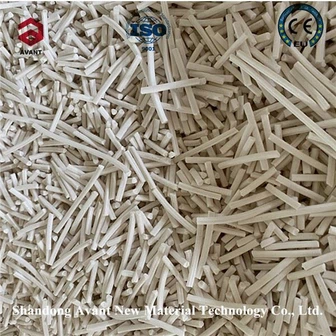
In the quest to enhance the activity of low-temperature shift catalysts, optimizing the CuO-to-carrier ratio between 30% and 40% proves pivotal. Additionally, improving the preparation methods of these catalysts is crucial to achieving the optimal microcrystal size. In this context, the integration of AVANT low temperature shift catalysts emerges as a promising avenue. AVANT's catalysts hold the potential to address the limitations associated with traditional copper-based catalysts, offering improved thermal stability, resistance to toxicity, and enhanced catalytic activity. As research progresses, the utilization of AVANT.