Material properties and applications of 5 major ceramic substrates

The following Avant will introduce the excellent properties and differences of five different ceramic substrate materials.
1. Beryllium Oxide (BeO)

BeO has a wurtzite structure, and the unit cell is cubic. It's thermal conductivity is extremely high. BeO ceramics with a BeO mass fraction of 99% have a thermal conductivity (thermal conductivity) of up to 310 W/(m·K) at room temperature, which is about 10 times that of the same purity Al2O3 ceramics.
It not only has extremely high heat transfer capacity, but also has the characteristics of low dielectric constant and dielectric loss, as well as high insulation and mechanical properties. In the application of high-power devices and circuits requiring high thermal conductivity, BeO ceramics Preferred material.
The high thermal conductivity and low loss characteristics of BeO are unmatched by other ceramic materials so far, but BeO has a very obvious disadvantage, and its powder is highly toxic.
2. Aluminium Oxide (Al2O3)
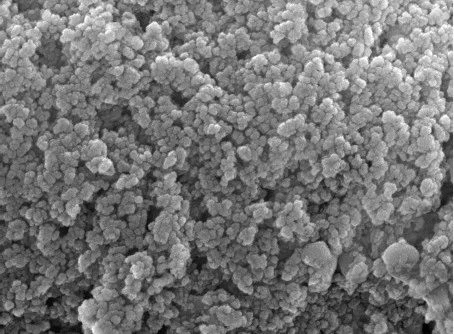
There are more than 10 kinds of homogeneous polycrystals of Al2O3, and its main crystal forms are as follows: α-Al2O3, β-Al2O3, γ-Al2O3 and ζ-Al2O3. Among them, α-Al2O3 has the lowest activity and is the most stable among the four main crystal forms. Its unit cell is a sharp rhombohedron and belongs to the hexagonal crystal system. α-Al2O3 has a compact structure and is a corundum-type structure, which can exist stably at all temperatures; when the temperature reaches 1000-1600 °C, other variants will irreversibly transform into α-Al2O3.
With the increase of the mass fraction of Al2O3 and the decrease of the mass fraction of the corresponding glass phase, the thermal conductivity of Al2O3 ceramics increases rapidly. When the mass fraction of Al2O3 reaches 99%, the thermal conductivity is about doubled compared with the mass fraction of 90%.
Although increasing the mass fraction of Al2O3 can improve the comprehensive properties of ceramics, it also increases the sintering temperature of ceramics, which indirectly leads to an increase in production costs.
3. Aluminium Nitride (AlN)

AlN is a group III-V compound with wurtzite structure. Its unit cell is AlN4 tetrahedron, which belongs to the hexagonal crystal system and has strong covalent bonds, so it has excellent mechanical properties and high flexural strength. Theoretically, its crystal density is 3.2611 g/cm3, so it has high thermal conductivity. The room temperature thermal conductivity of pure AlN crystal is as high as 320 W/(m·k), and the thermal conductivity of hot-pressed AlN substrate can reach 150 W/ (m·K), which is more than 5 times that of Al2O3, and the thermal expansion coefficient is 3.8×10⁻⁶~4.4×10⁻⁶/℃, which is well matched with the thermal expansion coefficient of semiconductor chip materials such as Si, SiC and GaAs.
AlN ceramics have higher thermal conductivity than Al2O3 ceramics, and are gradually replacing Al2O3 ceramics in high-power power electronics and other devices that require high thermal conductivity, and have broad application prospects. AlN ceramics are also regarded as the preferred material for the energy transmission window of power vacuum electronic devices because of their low secondary electron emission coefficient.
4. Silicon Nitride (Si3N4)

Si3N4 is a covalent bond compound with three crystal structures: α-Si3N4, β-Si3N4 and γ-Si3N4. Among them, α-Si3N4 and β-Si3N4 are the most common crystal forms, which are hexagonal structures. The thermal conductivity of single crystal Si3N4 can reach 400 W/(m·K). However, due to its phonon heat transfer, there are lattice defects such as vacancies and dislocations in the actual lattice, and impurities cause phonon scattering to increase, and the actual burning The thermal conductivity of the prepared ceramics is only about 20 W/(m·K). By optimizing the ratio and sintering process, its thermal conductivity has reached 106 W/(m·K). The thermal expansion coefficient of Si3N4 is about 3.0×10⁻⁶/℃, which is well matched with materials such as Si, SiC and GaAs, which makes Si3N4 ceramics an attractive ceramic substrate material for electronic devices with high thermal conductivity.
Among the existing ceramic substrates, Si3N4 ceramic substrates are considered to be comprehensive performances due to their high hardness, high mechanical strength, high temperature resistance and thermal stability, low dielectric constant and dielectric loss, wear resistance, corrosion resistance and other excellent properties. The best ceramic material.
At present, it is favored in IGBT module packaging, and gradually replaces Al2O3 and AlN ceramic substrates.
5. Silicon Carbide (SiC)

Single crystal SiC is well known as the third-generation semiconductor material, which has the advantages of large band gap, high breakdown voltage, high thermal conductivity and high electron saturation velocity. By adding a small amount of BeO and B2O3 to SiC to increase its resistivity, then adding the corresponding sintering aids and using hot-pressing sintering at temperatures above 1900 °C, SiC ceramics with a density of more than 98% can be prepared. SiC ceramics with different purities prepared by different sintering methods and sintering aids have thermal conductivity of 100-490 W/(m·K) at room temperature.
Since the dielectric constant of SiC ceramics is very large, it is only suitable for low frequency applications and not suitable for high frequency applications.
At present, the commonly used ceramic substrate materials in China are mainly Al2O3, AlN and Si3N4. Ceramic substrates fabricated by LTCC technology can integrate passive components such as resistors, capacitors and inductors in three-dimensional structures. Compared with the integration of semiconductors, which are mainly active devices, LTCC has a high-density three-dimensional interconnection wiring function