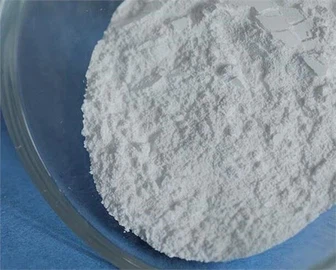
Introduction and advantages of insulation and thermal conductivity and LED materials.
At present, most of the thermal conductive materials used in the field of organic silicon are alumina, silicon oxide, zinc oxide, aluminum nitride, boron nitride, silicon carbide and so on.
Especially micron alumina, silicon powder as the main body, nano alumina, nitride as a high thermal conductivity field of filling powder; And zinc oxide is mostly used as thermal conductive paste (thermal grease) filler.
With the rapid growth of China's LED industry, the development of the upstream material industry has been greatly promoted, and the breakthrough in the field of high-end materials has been further promoted. A large number of plastic components are used in LED lamps, including LED packaging devices, LED optical lenses, light scattering elements, efficient heat dissipation elements, light reflection and light diffusion plates, etc.
From the perspective of the whole life cycle, organic composite thermal conductive plastic is more environmentally friendly, less energy consumption than metal material production, production process pollution is small, in line with the national energy conservation and emission reduction, energy saving needs. With the improvement of LED light efficiency and the reduction of heat generation, LED heat dissipation requirements will be gradually reduced, heat conduction plastic radiator will be able to meet the heat dissipation requirements of most conventional LED lamps.

1. Aluminum Nitride (AlN), advantages: very high thermal conductivity; Disadvantages: It's expensive.
After absorbing moisture, aluminum nitride will react with water and hydrolyze AlN + 3H2O=Al(OH)3+ NH3. The hydrolyzed Al(OH)3 will interrupt the thermal conduction pathway and then affect the phonon transmission, so the thermal conductivity of the finished product is low.
2. Boron nitride (BN), advantages: very high thermal conductivity, stable properties; Disadvantages: The price is high. Similar to aluminum nitride, the viscosity of the system increases greatly after a large amount of filling, which severely limits the application field of the product.
3. Magnesium oxide (MgO), advantages: low price; Disadvantages: easy to absorb moisture in the air, viscidity is strong, can not be filled in large quantities. It has poor acid resistance and is easily corroded by acid in general, which limits its application in acidic environment.
4, α-alumina (needle-like), advantages: cheap price; Disadvantages: low addition amount, in liquid silica gel, the maximum addition amount of ordinary needle-like alumina is generally about 300, the obtained product thermal conductivity is limited.
5, α-alumina (spherical), advantages: large amount of filling, in liquid silica gel, spherical alumina can be added to 600~800, the product high thermal conductivity; Disadvantages: More expensive, but less than boron and aluminum nitride.
6, zinc oxide (ZnO), advantages: particle size and uniformity is very good, suitable for the production of thermal grease; Disadvantages: low thermal conductivity, not suitable for production of high thermal conductivity products.
7, quartz powder (crystalline), advantages: high density, suitable for potting, low price, suitable for a large number of filling, reduce costs; Disadvantages: low thermal conductivity, not suitable for production of high thermal conductivity products. Higher density may produce stratification.

It is understood that the current traditional luminaire shell cooling materials mainly include the following three kinds: metal materials, ceramics and general plastic. Thermal conductive plastic, as a new material, mainly has the following three advantages:
First, reduce the cost, thermal conductive plastic can cooperate with some cost-effective power supply scheme, greatly reduce the cost of the overall lamp;
Second, plastic, the future development of LED lamps will not only stay in the lighting industry itself, it will also become a port of the Internet, or an indoor component, so it is very particular about plastic, and plastic relative to the traditional aluminum parts, in shaping can provide a great help;
Third, safety and environmental protection, can achieve recycling, good insulation also ensures the safety of its use.