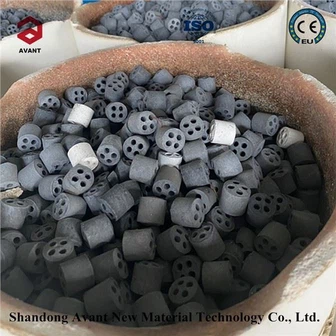
Application of continuous hydrogenation unit
The gas-phase hydrogenation method is only suitable for the reduction of nitro compounds with low boiling point and easy gasification; the liquid-phase hydrogenation method is not limited by the boiling point of nitro compounds, and has a wider application range.
The liquid-phase hydrogenation reaction is a heterogeneous reaction, which is controlled by diffusion. Therefore, in order to strengthen the hydrogenation reduction process, it is necessary to start with the hydrogenation equipment to strengthen the mass transfer between the gas-solid-liquid three-phase.
Continuous hydrogenation unit is mainly divided into four applications in chemical industry:
1. Continuous hydrogenation of 4-nitrodiphenylamine to 4-amino-diphenylamine
4-amino diphenylamine, commonly known as RT-BAE, is an important intermediate in the production of a variety of excellent rubber antioxidant properties. With the rapid development of our tire industry, its demand increases year by year. The current production process of RT-BAE in China mostly adopts the condensation of aniline and p-nitrobenzene chloride into 4-nitrodiphenylamine, and then catalytic hydrogenation under 2.0MPa in the batch stirred kettle, using the catalyst of Rennie nickel.
Due to the intermittent reaction and the troublesome production and treatment of Rennie nickel catalyst, the process is long, the equipment investment is large and the operation is troublesome, which limits the further improvement of the yield of RT-PCE. This step of hydrogenation reduction becomes the control step of the whole production process.
Therefore, according to the domestic production situation, the development of fixed bed continuous hydrogenation process has practical significance. The fixed bed continuous hydrogenation process can not only greatly simplify the process flow, reduce the equipment investment, but also greatly improve the production capacity of this step hydrogenation reaction, so as to reduce the production cost and obtain very obvious economic benefits.
2. Preparation of adipdiamine by continuous hydrogenation of adipdinitrile
Adipdiamine is an important organic chemical intermediate, mainly used in the production of polyamide, such as nylon 66 salt, nylon 610; It can also be used in the synthesis of diisocyanate, epoxy resin and urea-formaldehyde resin curing agent, organic crosslinking agent, etc.
With the continuous development of the synthetic fiber industry, the demand for hexadiemines is increasing worldwide, and the gap between supply and demand is large.
The production of adipdiamine is mainly based on adipdinitrile as raw material for continuous hydrogenation. The hydrogenation unit is the core equipment in the production of adipdiamine. Its type is gas, liquid and solid three-phase boiling fluidized bed reactor with unique structure.
3. Continuous hydrogenation of dicyclopentadiene
Dicyclopentadiene is a kind of compound with unique structure and high reactivity, which was used in pesticide, rubber, unsaturated resin and so on.
In recent years, there is a tendency to develop new polymer materials and fine chemical products, among which the more notable direction is the preparation of a compound with three-ring structure called bridge tetrahydrodicyclopentadiene (endo-TCD) by hydrogenation of dicyclopentadiene, which is the intermediate of synthetic fuel suspended tetrahydrodicyclopentadiene (exo-TCD). It is also an intermediate for the synthesis of high value-added fine chemical raw material amantadane.
At present, the commonly used hydrogenation catalyst in industrial production is the aluminum-based nickel-containing catalyst, which can be used for continuous hydrogenation by fixed bed.
4. Continuous hydrogenation of residual oil
Residual oil hydrotreating technology is to catalyze the reaction between residual oil and hydrogen under the condition of high temperature, high pressure and the presence of catalyst, remove the harmful impurities such as sulfur, nitrogen and metal in the residual oil molecules, and generate hydrogen sulfide, ammonia and metal sulfide.
At the same time, some of the larger molecules in the residue are cracked and hydrogenated to become the ideal components with smaller molecules. The quality of the residual oil after hydrogenation has been significantly improved, and it can be directly converted into gasoline and diesel oil which are urgently needed by the market by catalysis and cracking process, thus achieving the drying and frying, improving the utilization rate of resources and economic benefits.