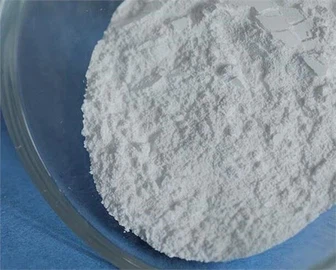
Composition of reforming catalysts
Catalytic reforming catalysts are loaded catalysts, i.e. the metal component is loaded onto a pot aluminium oxide modified with halogen. It consists of three main components: the active component, the co-catalyst and the carrier.
1. Active component
The active component is the core of the catalyst. The reforming catalyst should have two active functions: dehydrogenation and cracking and isomerisation, i.e. the dual function of the reforming catalyst. Generally some metallic elements provide the dehydrogenation function such as the dehydrogenation of cycloalkanes to aromatics and alkanes to olefins, also known as the metal function, which is generally a transition metal. The isomerisation reaction functions such as olefin cyclisation and five-membered ring isomerisation are generally provided by halogens, also known as acidic functions.
2. Co-catalysts
The main trend in reforming catalysts in recent years has been the introduction of other metals as co-catalysts.
-Platinum-rhenium series.
-Platinum-Iridium Series.
-Platinum-tin series.
3. Carriers
The carrier, formerly known as a stretcher, is not simply a support for the active component, but in a loaded catalyst it has the following functions.
-The carrier has a large specific surface area, which allows the active component to be well dispersed on its surface.
-The carrier is porous and the appropriate pore size distribution facilitates the diffusion of reactants to the inner surface for reaction.
-The carrier is an oxide with a high melting point. When the active components are dispersed on its surface, it can improve the thermal stability of the catalyst and make it less prone to fusion.
-It can improve the mechanical strength of the catalyst and reduce the loss.
-For precious metal catalysts, the active component can be saved and the cost of the catalyst can be reduced.
-It can also sometimes improve the activity, stability and selectivity of the catalyst due to the interaction between the carrier and the active component.
Commonly used carriers in industry are generally alumina, silica, molecular sieve, activated carbon, etc. For reforming catalysts, alumina is generally used as a carrier. It is also divided into two forms, η-Al2O3 and γ-Al2O3. At present γ-Al2O3 is mostly used, its main role is to support (carry) the active component and to share the acidic function with chlorine.